Penumbra No. 2 (2021): A Journal of Weird Fiction and Criticism by unknow
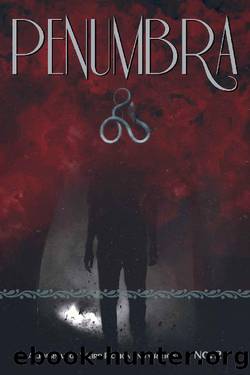
Author:unknow
Language: eng
Format: epub
Publisher: Hippocampus Press
Published: 2021-09-27T04:00:00+00:00
The Fantastic
Guy de Maupassant
Translated by S. T. Joshi
[First published in Le Gaulois (7 October 1883).âEd.]
Slowly, over the past twenty years, the supernatural has departed from our souls. It has evaporated the way a perfume evaporates when the bottle is uncorked. Placing the opening to our nostrils and taking a deep, deep breath, we detect no more than a vague scent. Itâs finished.
Our grandchildren will be amazed at their fathersâ naïve beliefs about things so absurd and implausible. They will never know what was once, at night, the fear of the mysterious, the fear of the supernatural. Only a few hundred people still inclined to believe in spirits, in the influence of certain creatures or certain things, in lucid somnambulism, and fake ghosts. Itâs finished.
Our poor, restless, powerless, limited minds, frightened by effects of whose cause we are ignorant, terrified by the ceaseless and incomprehensible spectacle of the world, have trembled for centuries under the strange and infantile beliefs which have served to explain the unknown. Today, we sense that we were mistaken, and we seek to understand without real knowledge. The first great step has been taken. We have rejected the mysterious, which for us is no more than the unexplored.
In twenty years, fear of the unreal will no longer exist even among country folk. It seems that Creation has taken another aspect, another shape, another significance than before. And the end result will certainly be the end of fantastic literature.
This literature occurred in very diverse eras and manners, from the chivalric romance, the Arabian Nights, the heroic poem, up to fairy tales and the disturbing stories of Hoffmann and Edgar Poe.
When humanity unhesitatingly believed [in such things], fantastic writers took no trouble at all in spinning their astonishing stories. From the beginning they thrust us into the impossible and kept us there, creating an infinite variety of implausible combinations and apparitions, all the terrifying mechanisms to create terror.
But, when scepticism at last entered into our minds, the art [of the fantastic] became more subtle. The writer searched for nuances, prowling around the supernatural rather than penetrating it. He created chilling effects while remaining within the limits of the possible, hurling our souls into hesitation and bewilderment. The uncertain reader, remaining ignorant, lost his footing as if on a body of water whose depths he could not see; he clung desperately to reality only to plunge even deeper, struggling anew in an arduous and feverish confusion as in a nightmare.
The extraordinarily terrifying power of Hoffmann and Edgar Poe derives from this skill, this specific manner of bringing us into contact with the fantastic, of disturbing us with natural events in which, nevertheless, there is something inexplicable and close to impossible.
[The balance of the essay consists of a personal reminiscence of the Russian writer Ivan Turgenev.]
Download
This site does not store any files on its server. We only index and link to content provided by other sites. Please contact the content providers to delete copyright contents if any and email us, we'll remove relevant links or contents immediately.
4 3 2 1: A Novel by Paul Auster(12524)
The handmaid's tale by Margaret Atwood(7839)
Giovanni's Room by James Baldwin(7441)
Asking the Right Questions: A Guide to Critical Thinking by M. Neil Browne & Stuart M. Keeley(5839)
Big Magic: Creative Living Beyond Fear by Elizabeth Gilbert(5838)
Ego Is the Enemy by Ryan Holiday(5536)
The Body: A Guide for Occupants by Bill Bryson(5184)
On Writing A Memoir of the Craft by Stephen King(5005)
Ken Follett - World without end by Ken Follett(4791)
Adulting by Kelly Williams Brown(4624)
Eat That Frog! by Brian Tracy(4613)
Bluets by Maggie Nelson(4607)
Guilty Pleasures by Laurell K Hamilton(4518)
The Poetry of Pablo Neruda by Pablo Neruda(4173)
Alive: The Story of the Andes Survivors by Piers Paul Read(4086)
Fingerprints of the Gods by Graham Hancock(4052)
The Book of Joy by Dalai Lama(4048)
White Noise - A Novel by Don DeLillo(4047)
The Bookshop by Penelope Fitzgerald(3903)
